SpaceX'in Halka Arz Belgelerini Ayrıştırma: Roket Şirketi AI'ın "Zarar Konteyneri" Haline Geldi

20 Mayıs'ta SpaceX, ABD Menkul Kıymetler ve Borsa Komisyonu'na (SEC) S-1 Kayıt Beyanını gönderdi, hisse kodu SPCX, Nasdaq'a listelenmeye hazırlanıyor. Bu, şimdiye kadar yapılmış en büyük halka arz işlemi, hedef değerlemesi yaklaşık 1.75 trilyon dolar. Sırtındaki milyarlarca dolarlık yük ile bu iş böyle olmalıydı. İlk bakışta her şey yolunda gözüküyordu. Ancak gerçekler, genel katılımcıların beklentileri ile oldukça farklı çıktı.
Çoğu kişinin SpaceX hakkındaki algısı, bir para basma makinesiydi. Starlink uydu internetini küresel ölçekte yaygınlaştırmış, fırlatma operasyonları yörünge piyasasını neredeyse tekeline almıştı. Ancak SpaceX'in S-1 başvurusuna göre, şirketin 2025 birleşik geliri 186.74 milyar dolar, yıllık net kaybı ise 49.4 milyar dolar. En karlı uzay şirketi olarak kabul edilen şirket, kağıt üzerinde zarar etmekteydi.
Zarar nereden kaynaklandı? Bunu bu yılın Şubat ayına kadar götürmek gerekiyor. Musk, kendisine ait AI şirketi xAI'ı tamamen hisse takasıyla SpaceX'e dahil etti. O zamandan beri, xAI, SpaceX'in "AI Şubesi" olarak birleşik mali tablolara dahil edildi. Bu S-1 başvurusu, birleşikten sonraki ilk tam mali açıklama ve xAI'ın denetlenmiş finansal durumu ilk kez kamuya açıklandı.
Öncelikle, paraların kaynağına bir göz atalım. Başvuruya göre, SpaceX'in 2025 geliri üç ana bölüme ayrılıyor. Bağlantı (Connectivity) bölümü yani Starlink, 114 milyar dolar gelir elde etti ve yıllık yaklaşık yüzde ellilik büyümeyle şirketin toplam gelirinin altıda beşine denk gelmektedir. Fırlatma operasyonları yaklaşık 40 milyar dolar gelir sağladı. AI bölümü ise 32 milyar dolar gelir elde etti.
Anahtar, gelirde değil, kar/zararda yatıyor. Üç bölümün sadece Starlink kârlı. Fırlatma operasyonları, o yılki gelirin büyük kısmını gelecek nesil roket Starship'in Ar-Ge'sine geri yatırdı; sadece bu kalemin maliyeti yaklaşık 30 milyar dolara ulaştı. AI bölümü ise farklı bir hikaye, 32 milyar dolar gelirin arkasında 64 milyar dolar işletme zararı bulunmaktadır. Bir hesap yaparsak, AI bölümü her 1 dolarlık işi başardığında 2 dolar zarar etmektedir.
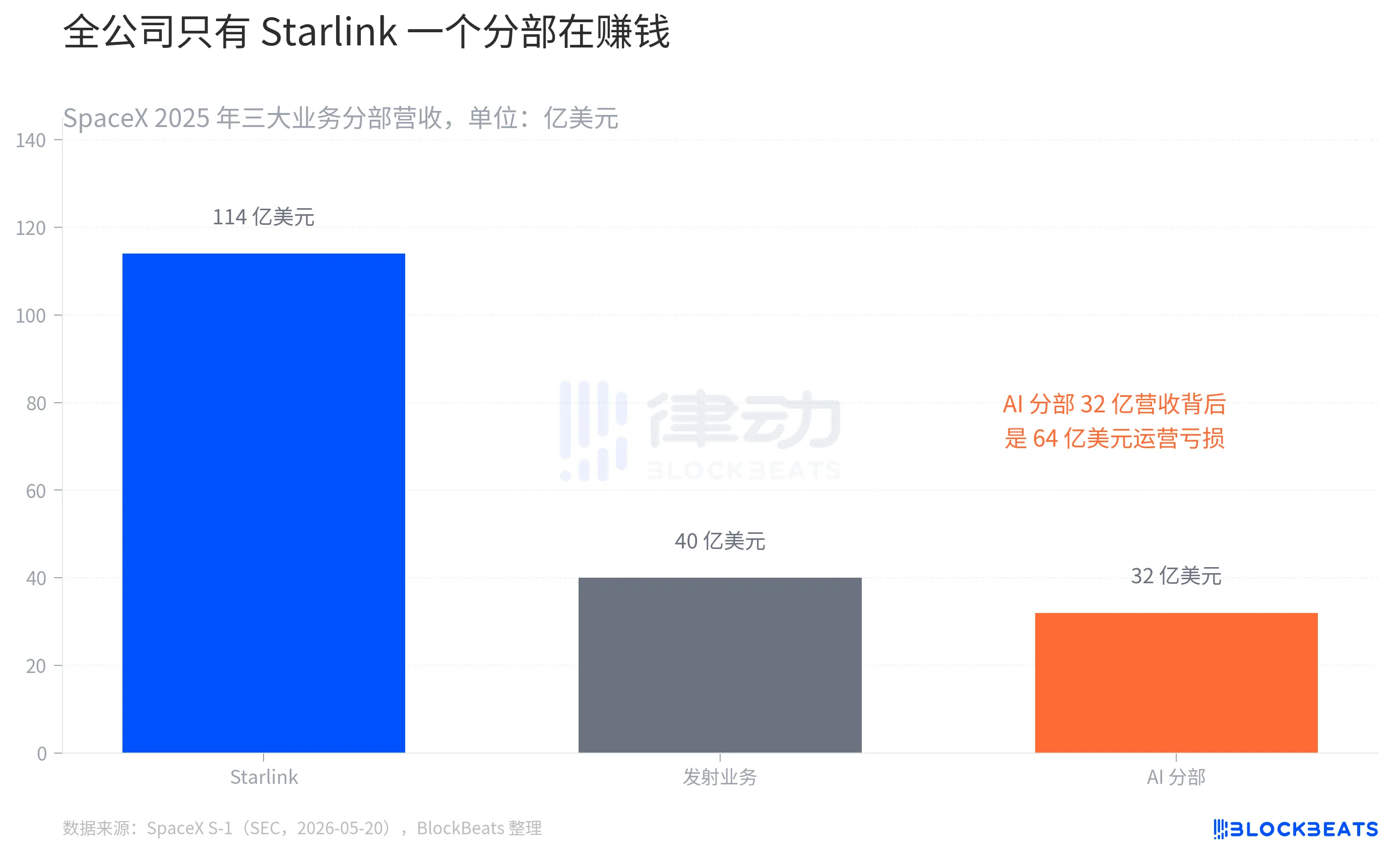
Bir şirketin üç iş bölümü vardır ve kâr elde edebilen tek şey Starlink'tir. Fırlatma operasyonları gelecek için harcama yaparken, AI bölümü şu anda zarar etmektedir ve şirketin tüm karı Starlink'in üzerine yüklenmiştir.
AI bölümünün ne kadar hızlı zarar ettiğini belirlemek için bir karşılaştırma seti var.
Belgelere göre, AI bölümünün 2026 yılının ilk çeyreğindeki işletme zararı 24.69 milyar dolar olarak kaydedilmiştir. Oysa SpaceX'in 2025 yılı için tüm yılın işletme zararı 25.89 milyar dolardı. Bir bölümün üç ayda kaybettiği para, neredeyse şirketin geçen yıl boyunca kaybettiği paranın eşdeğeridir.
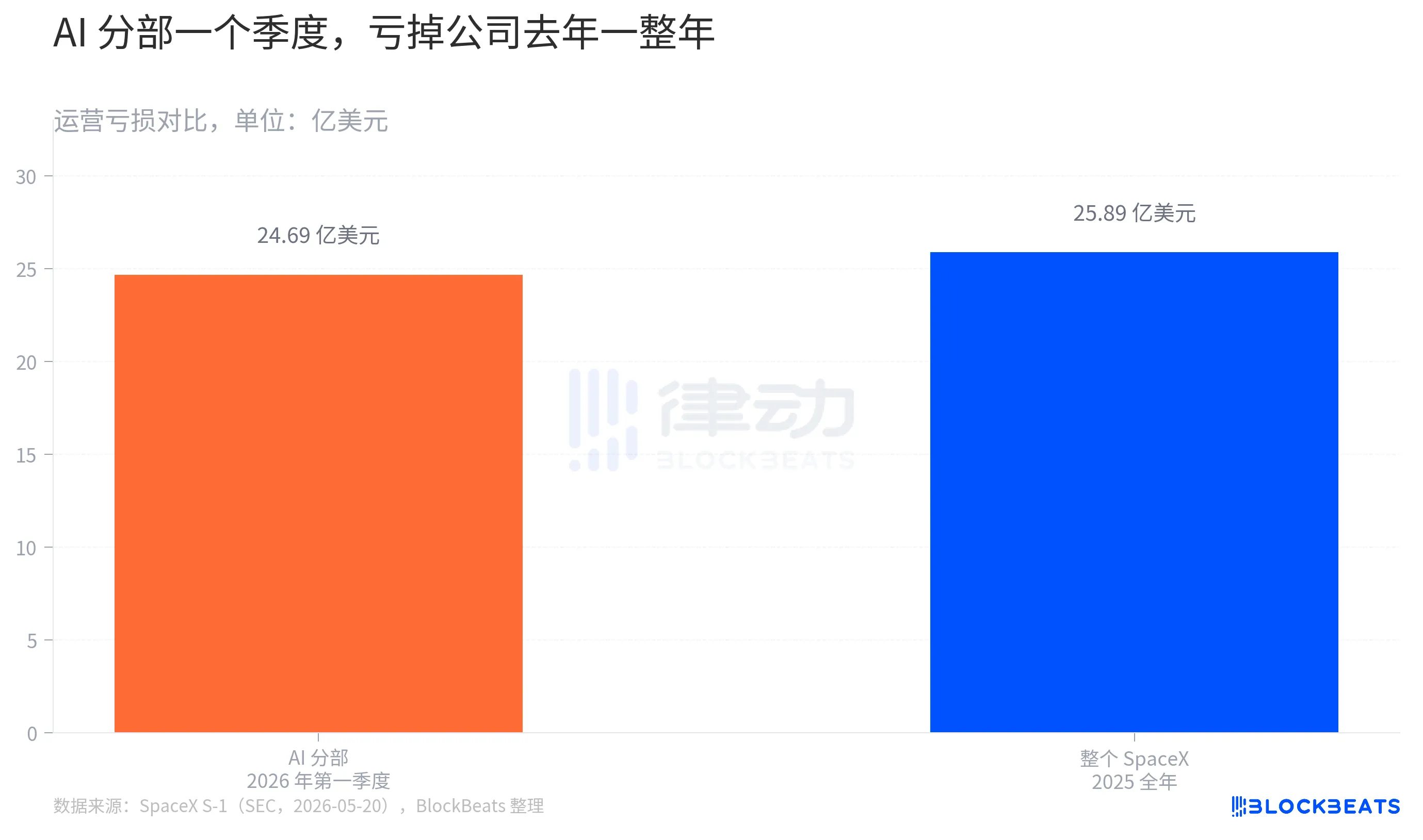
This comparison is made because xAI was only consolidated in February of this year. The 2025 report only partially reflects the AI division, and the first quarter of 2026 is its first complete entry into SpaceX's finances. The cost of full entry increased the company's quarterly net loss from $528 million in the first quarter of 2025 to $4.28 billion in the first quarter of 2026. In one year, the quarterly net loss expanded by over seven times.
Musk chose to push for an IPO at this point, and the timing itself speaks volumes. The losses of the AI division are still expanding, and the further down the line, the uglier the reports will be. Going public before the losses further escalate allows the public market to get involved sooner.
What fills this loss black hole of the AI division? The S-1 provides the answer: Anthropic.
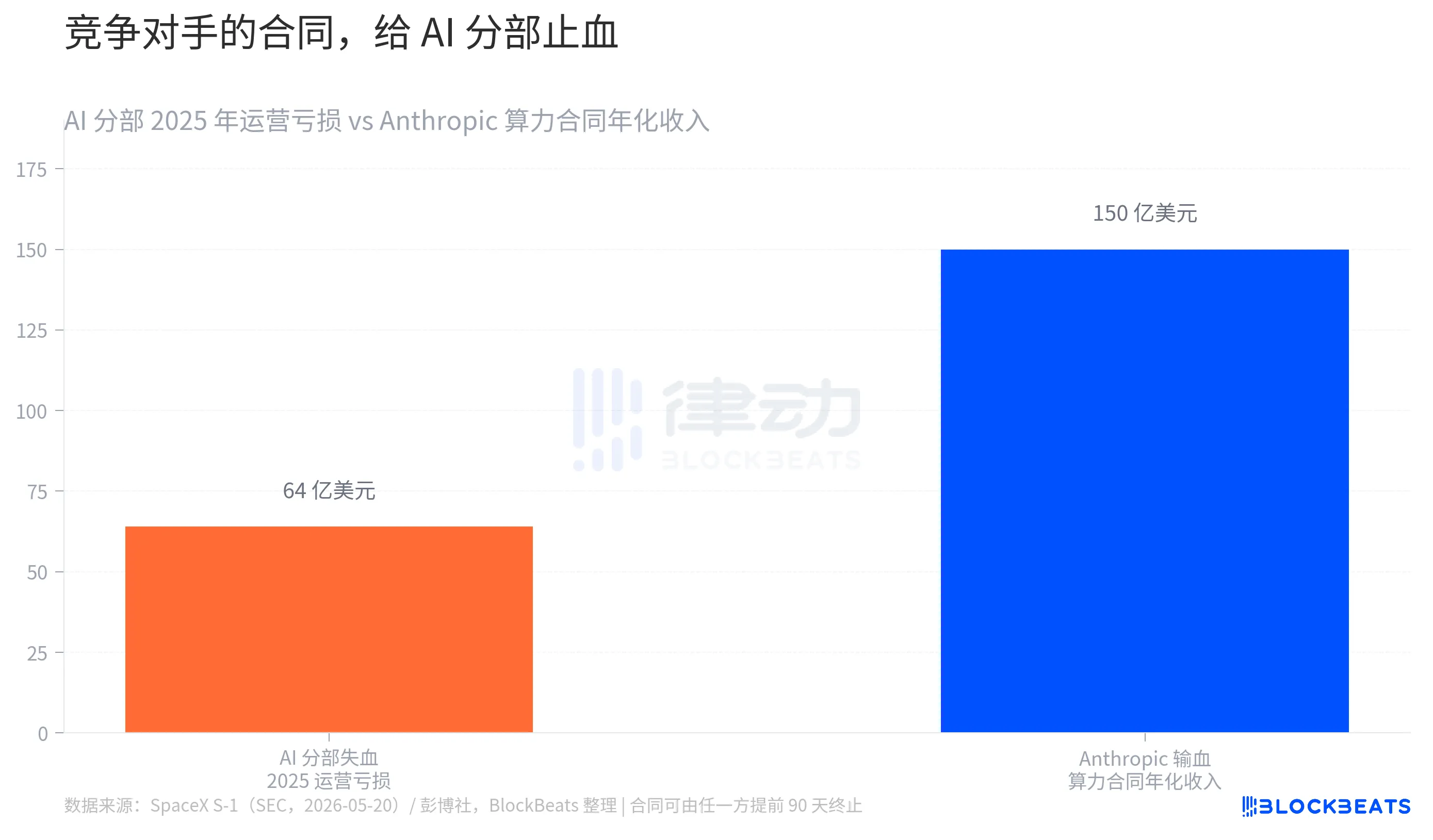
The prospectus disclosed a computational power service contract. Anthropic, the developer of Claude, pays SpaceX's AI division $1.25 billion per month to lease all the computational power of the Memphis Colossus 1 data center. This data center houses over 220,000 NVIDIA GPUs. The contract extends until May 2029, and based on monthly fees, the annual amount is approximately $15 billion. According to Bloomberg, the total amount over the entire period is around $45 billion.
Put $15 billion and $6.4 billion together. The annual computational power fee paid by Anthropic is more than twice the operational loss of the AI division in 2025. This contract is currently the main source of relief for this loss black hole.
The real highlight of this contract lies in the identities of both parties. Anthropic's Claude and xAI's Grok are direct competitors in the AI large model market. A competitor has become the AI division's largest computational power customer. In the S-1, SpaceX refers to this arrangement as "monetizing idle computation" and states that more similar contracts will be signed. However, a key detail about this lifeline is that the contract allows either party to terminate with a 90-day notice. The money that keeps the AI division alive is in the hands of its competitor.
Why is the market still willing to give a loss-making company a $1.75 trillion valuation? The answer lies in Starlink's growth trajectory.
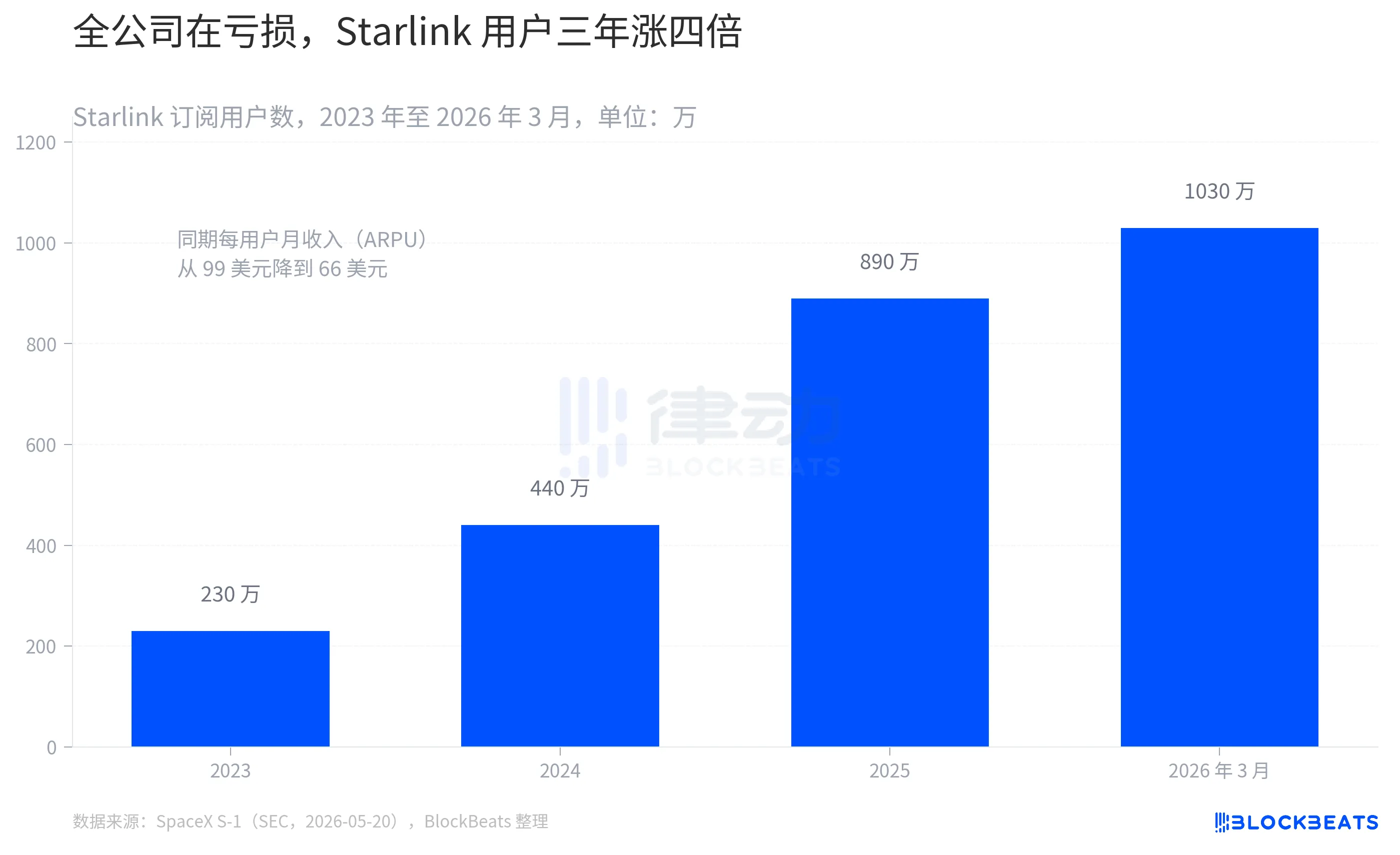
According to the S-1, Starlink's subscriber base is projected to grow from 2.3 million in 2023 to 4.4 million in 2024, 8.9 million in 2025, and reach 10.3 million by the end of March 2026. In three years, the number of users has more than quadrupled. This is the only profitable division of SpaceX and the only one still on a high-growth trajectory. The market is betting on this trajectory, not the current income statement.
A transformation is hidden within this growth. During the same period, Starlink's average revenue per user (ARPU) is expected to decrease from $99 in 2023 to $66 by the end of March 2026. While the user base is growing, the revenue contributed by each individual user is decreasing. Starlink is attracting more users by offering services at a lower price. Whether this trajectory can sustain the valuation depends on whether the speed of scaling can continue to outpace the decline in unit price.
SpaceX's prospectus presents a multiple-choice question to the public market. Buying it is equivalent to simultaneously acquiring a rapidly expanding Starlink and an AI division that could lose in one quarter what it made in revenue for the entire previous year. These two things are now bundled under the same stock symbol.
BlockBeats Resmi Topluluğuna Katılın:
Telegram Abonelik Grubu: https://t.me/theblockbeats
Telegram Sohbet Grubu: https://t.me/BlockBeats_App
Twitter Resmi Hesabı: https://twitter.com/BlockBeatsAsia